
# Why Hallucinations Are Catastrophic (Not Just Embarrassing) in Finance
In a consumer chatbot, an AI hallucination might recommend a restaurant that has closed. Embarrassing, but harmless. In enterprise finance, the same class of error can trigger a cascade of material consequences.
Scenario 1: The Duplicate Payment An AI extracts an incorrect invoice total — $147,000 instead of $14,700. The transposed digit looks plausible, passes a basic sanity check, and is approved. The duplicate payment creates a cash flow variance that takes 6 weeks to reconcile. Cost: $147,000 plus $8,200 in investigation labour.
Scenario 2: The Phantom Vendor Under pressure to process a backlog, an AI system generates a vendor record that partially matches an existing supplier. The slight name variant creates a new vendor master entry that bypasses fraud controls. Three invoices totalling $380,000 are processed before the discrepancy is caught.
Scenario 3: The Compliance Event An AI categorises a vendor payment as a standard operating expense when it should be classified as a related-party transaction requiring board disclosure. The misclassification, driven by an incorrect GL code assignment, constitutes a SOX control failure.
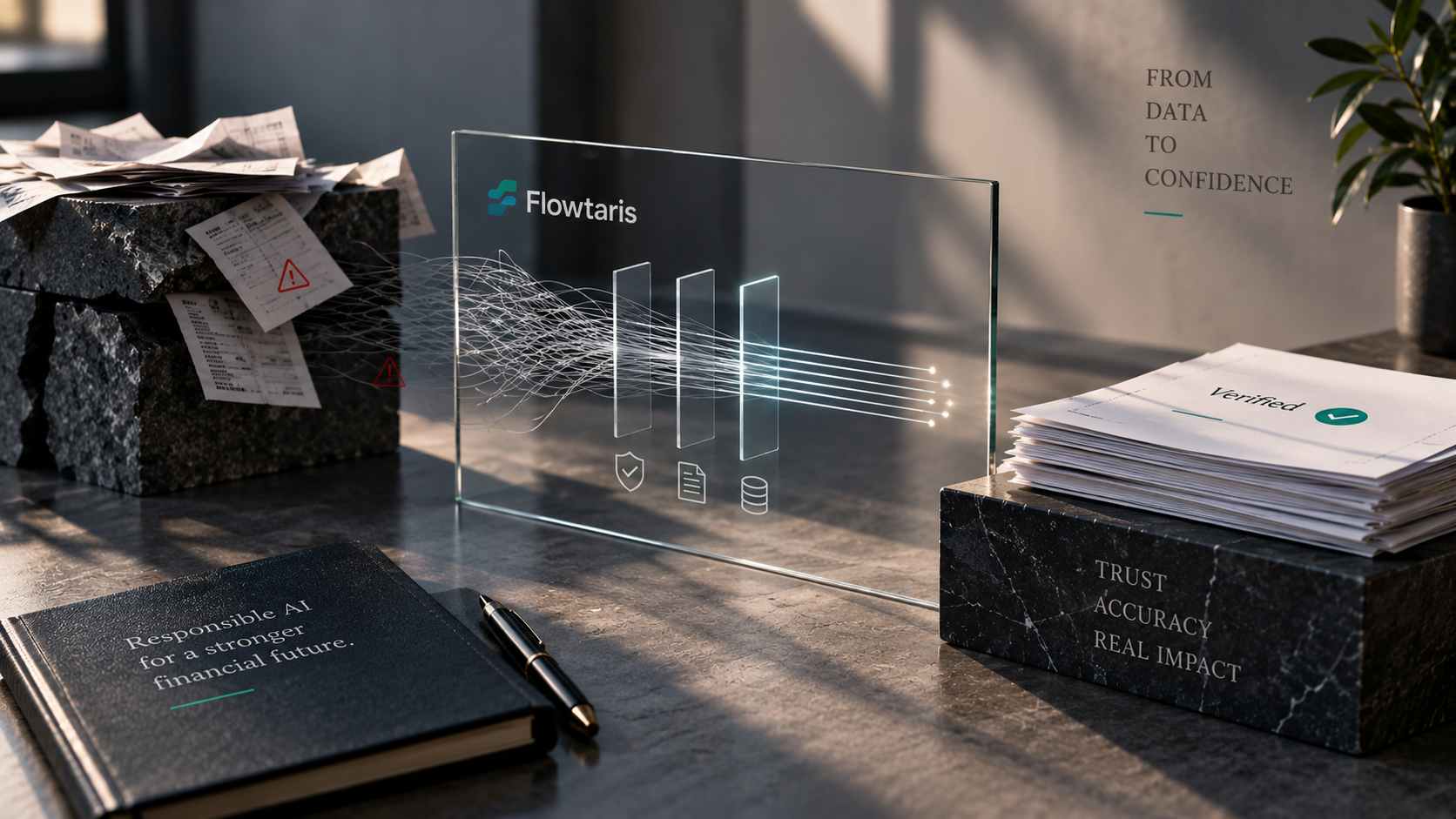
These are not hypothetical. They are real categories of failure documented in our implementation experience before Flowtaris's verification architecture was deployed. The only acceptable hallucination rate in financial AI is as close to zero as engineering can achieve.