
# The NetSuite AI Integration Landscape: What Works and What Does Not
NetSuite is a fundamentally API-centric ERP, built from the ground up for cloud integration. This makes it significantly more amenable to AI augmentation than on-premise ERPs like SAP ECC or legacy Oracle systems. However, several common integration approaches introduce unnecessary complexity and risk.
Approaches to Avoid: - Embedding AI inside SuiteScript: Possible but creates performance and maintenance issues. AI inference calls should never be synchronous within a transaction-saving workflow. - Direct AI API calls from NetSuite workflows: Creates hard coupling between your ERP configuration and your AI provider, making future model updates operationally risky. - Using NetSuite as the AI orchestration layer: NetSuite's SuiteScript execution environment is not designed for the compute and latency characteristics of AI model inference.
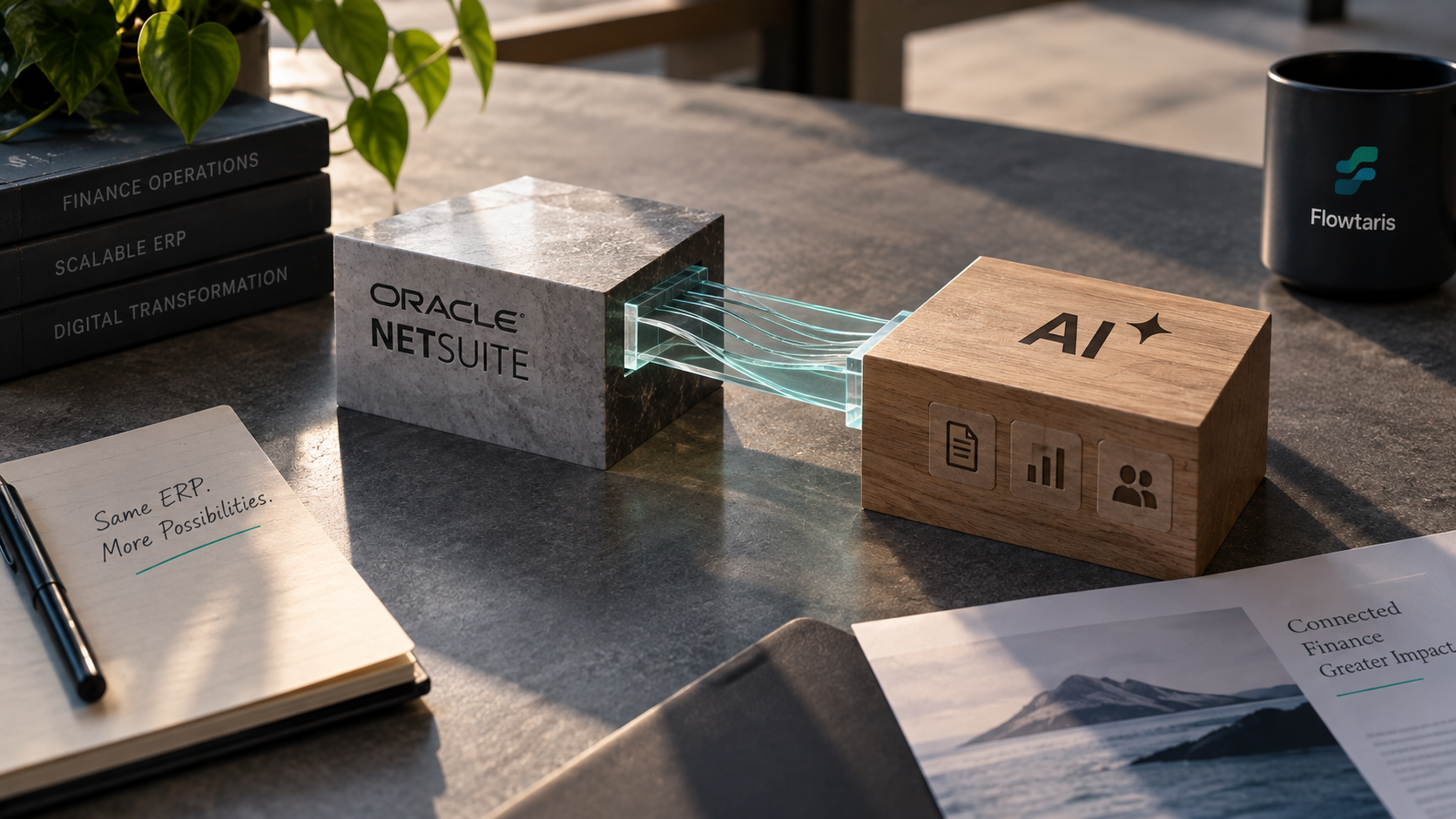
The Optimal Architecture: The Intelligence Layer The most robust and scalable approach positions AI as an intelligence layer that operates between your document intake systems and NetSuite. Documents flow into the AI layer, are enriched and validated, and then clean, coded data is pushed to NetSuite via the REST API.
This separation of concerns delivers three key advantages: 1. Zero ERP risk: Your NetSuite configuration is unchanged. AI failures do not affect ERP stability. 2. Model agility: You can update, retrain, or swap AI models without touching your NetSuite environment. 3. Multi-ERP extensibility: The same AI layer can service NetSuite alongside other ERPs if your organisation grows through acquisition.